As Top 5 NCCA-Accredited Personal Trainer Certification Programs for Career Growth in the US takes center stage, this opening passage beckons readers with engaging information into a world crafted with good knowledge, ensuring a reading experience that is both absorbing and distinctly original.
The following paragraphs provide detailed insights into the top 5 NCCA-accredited personal trainer certification programs and their impact on career growth in the US.
Overview of NCCA-Accredited Personal Trainer Certification Programs
When it comes to personal trainer certifications, NCCA accreditation holds significant importance in the fitness industry. NCCA accreditation ensures that a certification program meets the highest standards of quality and rigor, providing credibility and recognition to certified trainers.
Importance of NCCA Accreditation
NCCA accreditation is a stamp of approval that signifies a certification program has undergone rigorous evaluation and meets the established criteria for quality and excellence. This accreditation assures both employers and clients that a certified personal trainer has received a comprehensive education and training.
Comparison with other Certifications
While there are various certification options available in the fitness industry, NCCA accreditation sets a higher standard due to its stringent requirements and continuous evaluation process. Non-NCCA accredited certifications may not hold the same level of credibility and recognition in the industry.
Benefits of NCCA-Accredited Certification
- Enhanced Credibility: Holding an NCCA-accredited certification enhances the credibility of a personal trainer, leading to increased trust among clients and potential employers.
- Industry Recognition: NCCA accreditation is widely recognized and respected in the fitness industry, opening up more career opportunities for certified trainers.
- Quality Education: NCCA-accredited certification programs ensure that trainers receive quality education, practical training, and up-to-date knowledge in the field of fitness.
- Career Advancement: With an NCCA-accredited certification, personal trainers have better chances of career advancement, higher earning potential, and professional growth.
Top 5 NCCA-Accredited Personal Trainer Certification Programs
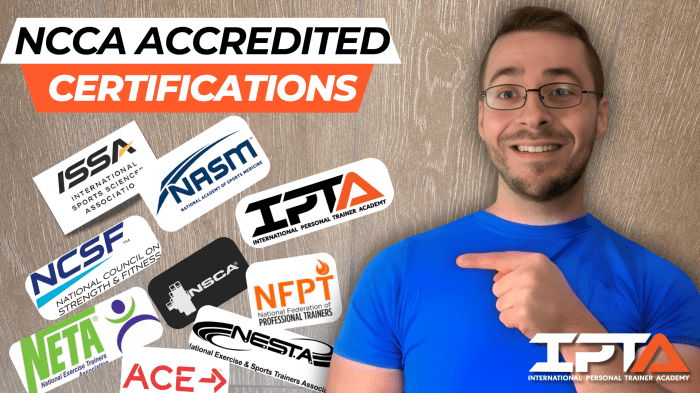
When looking to advance your career as a personal trainer, it's essential to choose a certification program that is recognized and respected in the industry. Here are the top 5 NCCA-accredited personal trainer certification programs that can help you achieve your goals:
American Council on Exercise (ACE)
- Eligibility:Must be at least 18 years old and have a high school diploma or equivalent.
- Cost:The cost of the ACE personal trainer certification program is around $599.
National Academy of Sports Medicine (NASM)
- Eligibility:Requires a high school diploma or equivalent and CPR/AED certification.
- Cost:The NASM personal trainer certification program costs approximately $699.
American College of Sports Medicine (ACSM)
- Eligibility:Candidates must have a high school diploma or equivalent, be at least 18 years old, and hold a current CPR/AED certification.
- Cost:The ACSM personal trainer certification program is priced at around $349.
National Strength and Conditioning Association (NSCA)
- Eligibility:Requires a high school diploma or equivalent, current CPR/AED certification, and must be at least 18 years old.
- Cost:The NSCA personal trainer certification program costs approximately $300-$500 depending on the level of study materials chosen.
International Sports Sciences Association (ISSA)
- Eligibility:Must be at least 18 years old and possess a high school diploma or equivalent.
- Cost:The ISSA personal trainer certification program is priced at around $599.
Curriculum and Specializations
When considering a personal trainer certification program, it's essential to look at the curriculum and any specialized certifications offered. These specialized certifications can greatly enhance career opportunities for personal trainers by allowing them to cater to specific populations or offer unique services.
Nutrition and Weight Management
- The curriculum of top certification programs often covers topics related to nutrition, including macronutrients, micronutrients, and dietary guidelines.
- Specializations in nutrition and weight management can provide personal trainers with the knowledge and skills to help clients reach their health and fitness goals through proper diet and nutrition.
- Having a specialization in nutrition can make personal trainers more marketable and allow them to offer comprehensive wellness programs to clients.
Corrective Exercise and Injury Prevention
- Certification programs may include coursework on corrective exercise techniques, anatomy, and common injuries.
- Specializations in corrective exercise and injury prevention can equip personal trainers with the tools to work with clients who have musculoskeletal imbalances or are recovering from injuries.
- These specialized certifications can help trainers design safe and effective exercise programs tailored to individual needs, ultimately reducing the risk of injuries.
Sports Performance and Conditioning
- Some certification programs offer coursework in sports performance training, focusing on enhancing athletic performance through strength, speed, and agility training.
- Specializations in sports performance and conditioning can open doors for personal trainers to work with athletes of all levels, from recreational to professional.
- Trainers with this specialization can design specialized training programs to help athletes improve their performance and prevent injuries specific to their sport.
Exam Format and Pass Rates
In the process of becoming a certified personal trainer through NCCA-accredited programs, understanding the exam format and pass rates is crucial for success. Let's delve into the specifics of each of the top 5 NCCA-accredited certification programs, along with insights into pass rates and strategies for exam preparation.
American Council on Exercise (ACE)
The ACE certification exam consists of 150 multiple-choice questions that must be completed within a time limit of 3 hours. The questions cover various topics related to fitness assessment, exercise programming, nutrition, and client consultation. The pass rate for the ACE exam is around 65%, making it essential to thoroughly prepare by utilizing study materials provided by ACE and practicing with sample questions.
National Academy of Sports Medicine (NASM)
The NASM certification exam is a computer-based test with 120 multiple-choice questions. Test-takers have 2 hours to complete the exam, which assesses knowledge in areas such as human movement science, program design, nutrition, and client assessment. The pass rate for the NASM exam is approximately 64%, highlighting the importance of consistent studying and utilizing NASM's resources for exam prep.
American College of Sports Medicine (ACSM)
ACSM's certification exam comprises 150 multiple-choice questions, covering topics like exercise physiology, exercise prescription, and risk stratification. Test-takers have 3 hours to complete the exam. The pass rate for the ACSM exam is around 60%, emphasizing the need for a solid understanding of exercise science principles and practical application.
National Strength and Conditioning Association (NSCA)
The NSCA-CPT exam consists of 140 multiple-choice questions and 2 case studies. Test-takers have 3 hours to complete the exam, which assesses knowledge in areas such as exercise technique, program design, and client safety. The pass rate for the NSCA-CPT exam is approximately 62%, underscoring the importance of hands-on experience and practical knowledge in addition to theoretical study.
Aerobics and Fitness Association of America (AFAA)
The AFAA certification exam includes 120 multiple-choice questions that cover topics like anatomy, kinesiology, fitness assessment, and program design. Test-takers have 2 hours to complete the exam. The pass rate for the AFAA exam is around 65%, emphasizing the need for a comprehensive understanding of exercise science principles and practical application.
Industry Recognition and Career Opportunities
Having an NCCA-accredited personal trainer certification can significantly boost your industry recognition and open doors to various career opportunities. Employers and clients often prefer trainers with NCCA-accredited certifications due to the rigorous standards and quality assurance associated with these programs.
Industry Recognition of the Top 5 NCCA-Accredited Certification Programs
- The American Council on Exercise (ACE) certification is highly recognized in the fitness industry, with many employers seeking trainers who hold this accreditation.
- NASM (National Academy of Sports Medicine) certification is also well-respected and widely recognized, especially in the realm of corrective exercise and sports performance.
- ACSM (American College of Sports Medicine) certification is considered the gold standard in the industry, offering a prestigious credential that can open up numerous career opportunities.
- ISSA (International Sports Sciences Association) certification is known for its comprehensive curriculum and practical approach, garnering respect from both employers and clients.
- NSCA (National Strength and Conditioning Association) certification is highly regarded for its focus on strength and conditioning, making it a valuable credential for trainers seeking career growth in this specialized area.
Career Opportunities for Personal Trainers with NCCA-Accredited Certifications
- Personal trainers with NCCA-accredited certifications have the opportunity to work in a variety of settings, including gyms, health clubs, corporate wellness programs, and private studios.
- Advanced certifications and specializations, such as nutrition, group fitness, or strength and conditioning, can further expand career opportunities for certified trainers.
- With an NCCA-accredited certification, personal trainers can pursue roles as fitness directors, wellness coaches, strength coaches, or even start their own successful training businesses.
- NCCA-accredited certifications can also lead to opportunities in specialized areas such as working with athletes, seniors, or individuals with medical conditions, providing a diverse range of career paths for certified trainers.
Concluding Remarks
![NCCA Accredited Certifications: Complete List [Updated]](https://software.maahadmuhammadi.com/wp-content/uploads/2025/12/Easiest-persona-trainer-certifications.png "NCCA Accredited Certifications: Complete List [Updated]")
In conclusion, the discussion on the top 5 NCCA-Accredited Personal Trainer Certification Programs for Career Growth in the US highlights the significance of choosing the right certification for advancing in the fitness industry.
FAQs
What are the eligibility requirements for NCCA-accredited personal trainer certification programs?
Eligibility requirements vary by program but typically include a high school diploma or GED, CPR/AED certification, and a passion for fitness.
How do specialized certifications enhance career opportunities for personal trainers?
Specialized certifications allow personal trainers to cater to specific client needs, stand out in a competitive market, and potentially earn higher salaries.

![NCCA Accredited Certifications: Complete List [Updated]](https://software.maahadmuhammadi.com/wp-content/uploads/2025/12/Easiest-persona-trainer-certifications-120x86.png)